About the Book
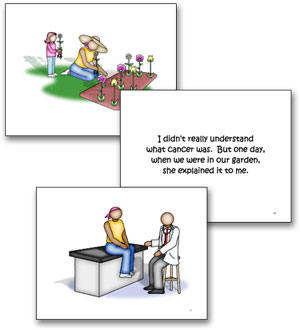
This award-winning book was developed with input from cancer survivors and children. Through a simple story narrated by a young child, the book explains cancer by comparing weeds in a garden to cancer cells in the body. It addresses common questions children can have like Did I cause it? Am I going to get it? and how medical treatments can affect the body. It concludes with tips for adults to talk to children about cancer and two pages of art activities
In addition to researching psychosocial issues young children of parents with cancer face and what’s developmentally appropriate information to share, the author worked closely with cancer survivors to develop this book. They discussed their experiences talking about their diagnosis with children in their lives and shared what questions they were asked. They shared In Mommy’s Garden and said:
- The book is appropriate in length and amount of information for young children.
- The analogy that correlates cancer with weeds in a garden makes the concept of how cancer and treatments impact the body understandable.
- It has a positive ending and optimistic tone. There’s no mention or inference of death and does not allude to the concept that cancer means you won’t survive.
- It helps stimulate conversation and gives you the words when you don’t know where to start.
- It doesn’t just have to be used by parents. It can be used by any family member, health professionals, child-life specialists, social workers, teachers, librarians, and other trusted adults.
- The illustrations are unique. The book can be used by anyone of any race or ethnicity. The faceless characters without expressions help people feel however they want, rather than reflect the feeling of a character.
Awards and Recognition
In Mommy’s Garden: A Book to Help Explain Cancer to Young Children received several awards:
- Best Health Education Print Material
American Public Health Association - Patient Education Information Award
National Health Information Awards - Dean's Day Research Award
University of Pittsburgh’s Graduate School of Public Health